Sarasota, FL
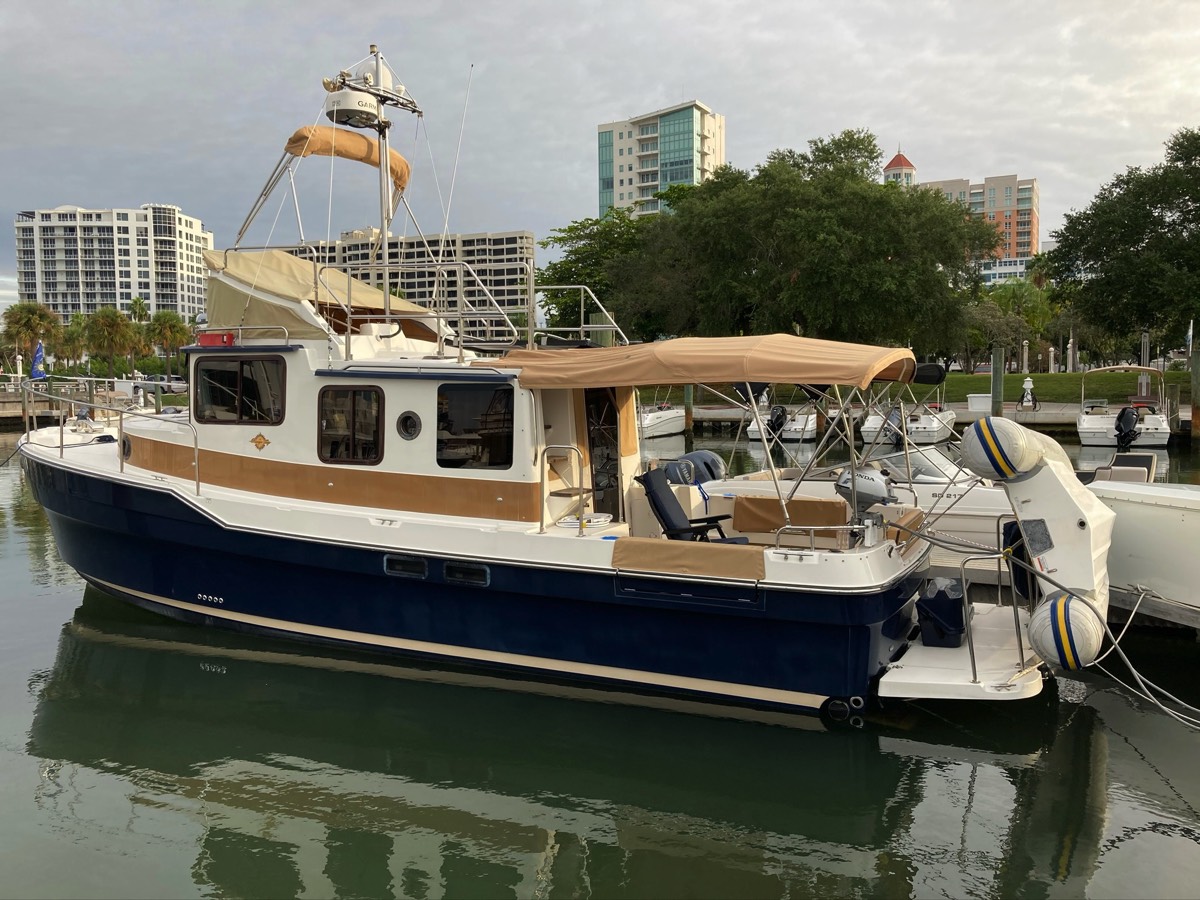
MarinaJack in Sarasota, FL
Sarasota gradually grew around the docks as originally it had only ferry access from Tampa; there were no roads to it. Those docks were eventually developed into the largest marina on Florida’s west coast by Jack Graham, thus its name. Alto offered down-town living and Yelp described
42 bars and restaurants within just 1800 feet of her slip! But as Gail’s ambulation and balance were worsening, living on a boat was no longer an option. So after four years of looking
Jerry finally found and renovated a small in-town condo. A major feature was that it was just a 12-minute Uber ride from the local airport, SRQ, and direct flights from Providence or Boston could get us there in under three hours. Perfect!
Sarasota met most of my criteria: It was a small, beautiful city not too crowded even in the winter season and walkable with over 400 bars and cafés – many with outdoor seating. There were dozens of theaters, an opera and even nearby National League baseball winter training ballparks. It was charming and elegant, but the Bentleys and Lamborghinis everywhere indicated how wealthy you needed to be to live with water views in the tall condos. And there are no in-town beaches, although some of the best beaches in the world are on nearby Siesta and Long Boat Keys. Living on a boat made it affordable and fun, but incredibly hot in the summers given full sun exposure.
Sarasota had never been directly hit by a hurricane, until 2025. The climate was changing. Through 2024 we watched anxiously as five hurricanes developed in the Gulf. Alto II was too big to pull out of the water preemptively, and living 1500 miles away precluded good preparations. Jerry made plans to sell her and he bought a smaller outboard Ranger Tug (Alto III) which could be trailered. After all, he didn’t need the big Tug to live on since he had bought a condo.
Then Hurricane Helene, a cat. 3 storm, passed by and produced a 10-foot surge that flipped over the floating concrete finger dock Alto II was tied to. Luckily, she had been sold and moved just the day before!!! Then, a week later Hurricane Milton destroyed the nearby Keys and a good deal of the city. Through it all, Alto III survived fine sitting on her trailer, out of the water.
Worrying about Florida was too much. And suddenly, after ten years of watching the Cape Cod real estate market, Jerry saw a Tidewatch (TW) condo came on the market. We’ve had only two hurricanes on the Cape in the last 35 years. In 1991 Hurricane Bob, a cat. 2 storm, wrecked Jerry’s little sailboat in Cotuit Bay. It was the most intense storm since 1938, but still only a cat. 2. We’ve had many serious storms since, but only Hurricane Irene’s (2011) off-shore winds, Sandy’s (2012) heavy rain, and Debby’s rip currents and rain has caused any significant damage.
Cape Cod has much less storm risk then Florida and Gail was not traveling easily anymore. So we bought TW, and towed Alto III to our Cotuit home on Cape Cod and sold the Florida condo. It felt weird to own a waterfront vacation condo just 18 minutes from our main home, but now share with a few summer renters and it’s affordable. Jerry miss Florida’s warm winters, but not the hurricanes, and since he has Alto III in the Nantucket Sound and Gail prefers living on land we are doing just fine..
Florida: No Longer a Realistic Option
It’s worth addressing Florida’s new Milestone Inspection Law which mandates any condo building over two stories, 25+ years old must be inspected by independent engineers for future issues. To justify their fees, they always find stuff just like a buyer’s home inspection always does. They are looking for “future” not just current problems. The issue is that condo associations must establish adequate reserves to cover any predicted preventive maintenance within two years.
So when an inspector says you need a new roof in the next decade, special assessments must be paid within two years to reserve adequate funds for that eventual expense; i.e. you can be hit with massive assessments that need to be paid within a year or two even though there is no immediate problem. Even tile roofs need replacement every 25 years, and concrete walls develop “spalling” requiring repair/prevention. Being on the salt ocean means rust everywhere. And, you can’t budget for any of it. You have two years to get the residents to cough up the money in advance of spending it.
All buildings need maintenance, but now you must pay in advance for predicted issues, not deal with problems as they come up. BTW the Inspection Law, being Republican in nature, ruled out any bailouts or state funding for loans to owners who suddenly face massive special assessments payable in a year or two. All condo buildings over two stories near the ocean need their first inspection at 25 years of age, and then every ten years after. A time bomb awaits any condo unless, like our Sarasota properties, they are in a one- or two-story building.
Newer buildings are now unaffordable as they don’t have to be inspected right away, while units in older condo buildings are unsellable due to the risk of future inspection discoveries. No one can plan for special assessments, they occur on an inspector’s whim. Gail’s ambulation problems precluded a single-family home on stilts (who wants that anyway), and mandatory evacuations for living in a flood zone (that’s nearly all coastal homes) was a deal killer for Jerry. So, salt waterfront living anywhere in Florida was out. If you are thinking of retiring in Florida, there is much more to worry about than hurricane risk. We won’t address the insurance crisis – affordable insurance is expected to decide the next governor’s race, it’s that big of an issue.
The Trip
To verify giving up on coastal living in other southern states was the right move, after selling the Sarasota condo Jerry drove his mighty Honda Fit back to Cape Cod looking at alternatives to TW along the way. He wondered if he could find greener grass (a better beach house) on the East Coast as a retirement spot. Spoiler Alert: he did not find a better place for oceanfront living with beach access than TW. Everything else was on stilts or in a new high-rise condo building. There were few waterside villages with charm that could compete with New Seabury, or towns as nice as the Mashpee Commons. For you, gentle reader who might be skeptical, he documents the trip here:
Starting the journey, Jerry skipped the Keys (been there and done that) and the east coast of Florida as Miami Beach, Hollywood Beach, Fort Lauderdale, the Palm Beaches, the Hutchinson islands, Melbourne Beach, Cape Canaveral, Cocoa Beach, etc. just did not meet his criteria. In the past his parents had waterview condos on Highland Beach (near Delray) and on Jupiter Island so he knew those areas well.
So Where Else?
Driving up to Cape Cod from Florida, Jerry’s goal was to explore the Sea Islands, which are over 100 tidal and barrier reef islands from northern Florida through Georgia, and South & North Carolina. Settled thousands of years ago, the Gullah Geechee people still live there, but are being gentrified out of existence. Still the coastal areas were intriguing with lots of beach, potential for charm and no Milestone Laws.
Lets visit the Sea Islands traveling up the east coast of the US beginning with Fernandina Beach on Amelia Island in the next section.